

NVIDIA Nemotron is a family of advanced open AI models developed by NVIDIA to power next-generation artificial intelligence systems. It is designed to support reasoning, multimodal understanding, and agent-based AI applications that can perform complex tasks across industries. In 2026, Nemotron has become a key part of NVIDIA’s strategy to strengthen open and scalable AI development, especially for enterprise and developer ecosystems.
Unlike traditional AI models that focus on single tasks such as text generation or classification, Nemotron is built for flexibility and real-world intelligence. It integrates language, vision, audio, and reasoning capabilities into a unified ecosystem. This allows it to understand richer context and handle complex inputs more effectively. As a result, it is widely used by developers, researchers, and enterprises building advanced AI agents and automation systems.
Information table
| Feature | Details |
|---|---|
| Developer | NVIDIA |
| Type | Open-weight AI model family |
| Purpose | Advanced AI reasoning, multimodal understanding, and agent-based systems |
| Core Strength | Multi-step reasoning and autonomous task execution |
| Input Types | Text, image, audio, video (multimodal support) |
| Key Capability | Agentic AI (tool use, planning, execution) |
| Architecture | Transformer-based advanced AI system |
| Optimization | Designed for NVIDIA GPU acceleration |
| Performance Focus | High accuracy, low latency, scalable computing |
| Deployment Types | Cloud, enterprise systems, edge devices |
| Best Use Cases | Coding assistants, automation, research, analytics |
| Industry Use | Healthcare, finance, robotics, enterprise AI |
| Key Advantage | Open and customizable AI ecosystem |
| 2026 Importance | Core technology for next-generation AI agents |
| Flexibility | Supports small to large-scale AI models |
| Safety Features | Built-in alignment and safety systems |
What is NVIDIA Nemotron?
NVIDIA Nemotron is an open-weight AI model family designed for building intelligent systems that can think, reason, and act in dynamic environments. It is part of NVIDIA’s broader initiative to support open frontier AI development, enabling customization for different industries and use cases. These models are trained on large-scale datasets to handle advanced workflows such as coding assistance, scientific research, business automation, and data analysis.
Nemotron is not just a conversational AI system. It is built for “agentic AI,” meaning it can interact with external tools, APIs, and environments to complete multi-step tasks. Instead of only responding to prompts, it can plan actions, execute processes, and refine outputs based on feedback. This makes it a foundational technology for future AI-powered ecosystems in business and technology sectors.
Key Features of NVIDIA Nemotron
Nemotron includes several advanced capabilities that make it stand out in 2026. One of its most important features is multimodal understanding, which allows it to process and combine text, images, audio, and video inputs. This makes it significantly more powerful than traditional language-only models and enables richer real-world applications.
Another major feature is its advanced reasoning ability. Nemotron models are trained to solve complex problems step by step, making them highly effective for coding, scientific analysis, and decision-making systems. It also includes improved alignment and safety mechanisms that help ensure reliable, controlled, and accurate outputs across different tasks and environments.
Performance of NVIDIA Nemotron
Nemotron delivers strong performance in both accuracy and efficiency, especially when running on optimized NVIDIA hardware platforms. It uses advanced acceleration techniques that reduce latency and improve processing speed. This makes it highly suitable for real-time AI applications such as intelligent assistants, automation systems, and interactive enterprise tools.
Benchmark results show that Nemotron performs exceptionally well in reasoning, coding, and multimodal tasks. It is capable of handling large-scale workloads while maintaining stability and efficiency. This performance makes it a strong choice for industries such as healthcare, finance, robotics, and enterprise analytics, where reliability and speed are critical.
Architecture Behind NVIDIA Nemotron
The architecture of Nemotron is based on modern transformer-based AI systems combined with advanced optimization techniques developed by NVIDIA. It uses efficient parameter activation methods that improve performance while reducing computational costs. This allows the model to deliver high-level intelligence without requiring excessive hardware resources.
Nemotron is also designed with modular deployment in mind, meaning developers can choose different model sizes based on their needs. Smaller versions are optimized for edge devices and lightweight applications, while larger versions are used for complex enterprise-level tasks. This scalability makes Nemotron highly flexible and adaptable across different environments and industries.
Why NVIDIA Nemotron Matters in 2026
Nemotron plays a major role in shaping the future of artificial intelligence in 2026. It supports the global shift toward open AI ecosystems where developers can build, fine-tune, and deploy models without heavy restrictions. This open approach encourages faster innovation, reduces dependency on closed-source systems, and allows smaller companies and independent developers to compete in the AI space.
Another important reason Nemotron matters is its ability to improve AI accessibility at scale. It is designed to work efficiently on NVIDIA-optimized infrastructure, making high-performance AI more practical for businesses of different sizes. This helps bridge the gap between advanced AI research and real-world industrial adoption, especially in sectors where automation and intelligent decision-making are becoming essential.
It also matters because it powers next-generation AI agents that can automate complex tasks, improve productivity, and assist in real-time decision-making. These agents are not limited to simple responses they can reason, plan, and execute multi-step workflows. As industries increasingly rely on AI-driven automation, Nemotron becomes a core technology for building intelligent systems that can operate with minimal human intervention.
Use Cases of NVIDIA Nemotron
Nemotron is used in a wide range of applications including coding assistants, research tools, and business automation systems. It helps developers write, debug, and optimize code more efficiently while also assisting in software development workflows. In research environments, it can analyze large datasets, summarize complex information, and generate meaningful insights from structured and unstructured data.
In enterprise environments, Nemotron is widely used for workflow automation, document processing, and customer support systems. Its ability to understand and process multiple types of data such as text, images, and structured inputs makes it highly valuable for modern businesses. Industries like healthcare, robotics, education, and finance use it to improve accuracy, reduce manual effort, and increase operational efficiency.
AI Agent Capabilities of NVIDIA Nemotron
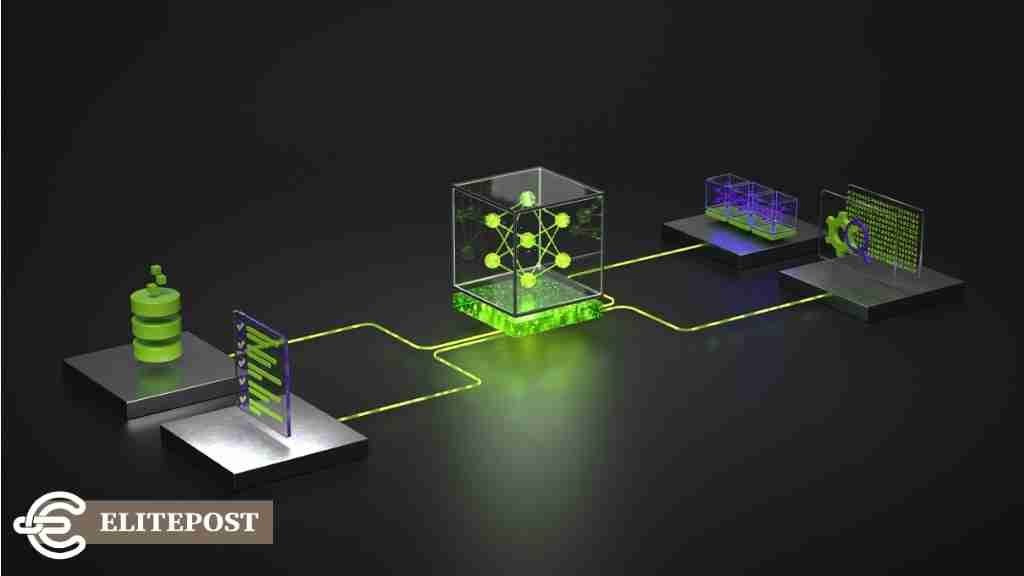
One of the most important aspects of Nemotron is its ability to power autonomous AI agents. These agents can perform tasks independently by interacting with external tools, APIs, and systems. They are capable of searching for information, executing commands, analyzing results, and making decisions based on context and objectives.
These capabilities make Nemotron ideal for building fully autonomous systems that go beyond traditional AI chat models. Instead of only generating responses, it can actively complete workflows such as scheduling, data processing, coding tasks, and system monitoring. This shift toward agent-based intelligence represents a major step forward in AI evolution and automation.
Future Potential of NVIDIA Nemotron
The future of Nemotron looks highly promising as artificial intelligence continues to evolve rapidly. It is expected to become more powerful with improved reasoning abilities, higher efficiency, and deeper multimodal understanding. These improvements will allow it to handle even more complex real-world applications across industries.
As more companies move toward open and customizable AI models, Nemotron is likely to play a central role in shaping the global AI ecosystem. It represents a shift toward more transparent, scalable, and flexible artificial intelligence systems. Over time, it could become a foundation for next-generation AI infrastructure used in both enterprise and consumer applications.
Conclusion
NVIDIA Nemotron is a powerful AI model family that is redefining how intelligent systems are built in 2026. With its advanced features, strong performance, and wide range of applications, it is becoming a key foundation for modern AI development.
It is not just a model but a complete ecosystem designed for the future of agentic AI. As technology continues to advance, Nemotron will remain an important part of the global AI revolution.
FAQs
Q1: What is NVIDIA Nemotron used for?
NVIDIA Nemotron is used for building AI agents, coding tools, automation systems, and multimodal AI applications.
Q2: Is NVIDIA Nemotron open source?
Yes, many Nemotron models are released as open-weight models for developers and researchers.
Q3: What makes Nemotron different from other AI models?
It supports multimodal input, advanced reasoning, and agent-based task execution.
Q4: Can Nemotron be used for business applications?
Yes, it is widely used in enterprise automation, analytics, and customer support systems.
Q5: Why is Nemotron important in 2026?
It is important because it powers next-generation AI agents and supports the future of open AI development.
VISIT MORE: ELITEPOST